

How Long Does a Roof Last? What I've Learned After Tearing Off Hundreds of Them in Central Ohio
Most roofs last between 20 and 50 years, but the honest answer depends on what's on top of your house. A standard asphalt shingle roof in Central Ohio typically lasts 20–25 years, while metal can push 50–70 years and slate can outlive the homeowner. The material is only half the story — climate, ventilation, and install quality decide whether you hit the high end of that range or the low end.
Key Takeaways
- Asphalt shingle roofs in Ohio usually last 20–25 years (architectural shingles can reach 30 with luck and good ventilation).
- Metal roofs last 40–70 years and handle hail and freeze-thaw better than almost anything else.
- Tile roofs can last 50+ years; slate can last 75–100+ years.
- Central Ohio's hail, wind, and freeze-thaw cycles routinely knock 3–7 years off the manufacturer's number.
- A roof can often be repaired instead of replaced — but only if the damage is isolated and the underlayment is still sound.
If you're standing in your yard squinting up at curling shingles wondering whether you've got two more years or ten, I get it — that's the exact question I get asked twice a day, every day. My name is Ethen Steele and I run Dynasty Roofing and Restoration out of Reynoldsburg. I've personally walked, inspected, and torn off more Central Ohio roofs than I can count, and the short answer to "how long does a roof last" is this: somewhere between 20 and 50 years, depending on the material — but in Ohio, you should plan for the lower end of whatever range you read online. Let me show you why.
How Long Does a Shingle Roof Last in Ohio?
A standard asphalt shingle roof in Ohio lasts about 20–25 years, with architectural shingles occasionally reaching 28–30 years under ideal conditions. That's the real-world number — not the "30-year shingle" marketing on the wrapper.
Here's the thing nobody tells you when you're shopping for a roof: a "30-year shingle" is a warranty classification, not a service-life promise. I've climbed onto plenty of 17-year-old "30-year" roofs in Pickerington and Pataskala that were already done. I've also seen a few 28-year-old roofs in Reynoldsburg that still had life left. The difference almost always comes down to three things — ventilation, install quality, and how many hail events the roof has taken.
"If I had to put a single Ohio number on it, I'd say plan for 22 years on an architectural asphalt roof and budget accordingly. Anything past that is a bonus, anything less than that usually traces back to bad attic airflow or a storm we forgot about."
What Kills a Shingle Roof Early in Central Ohio
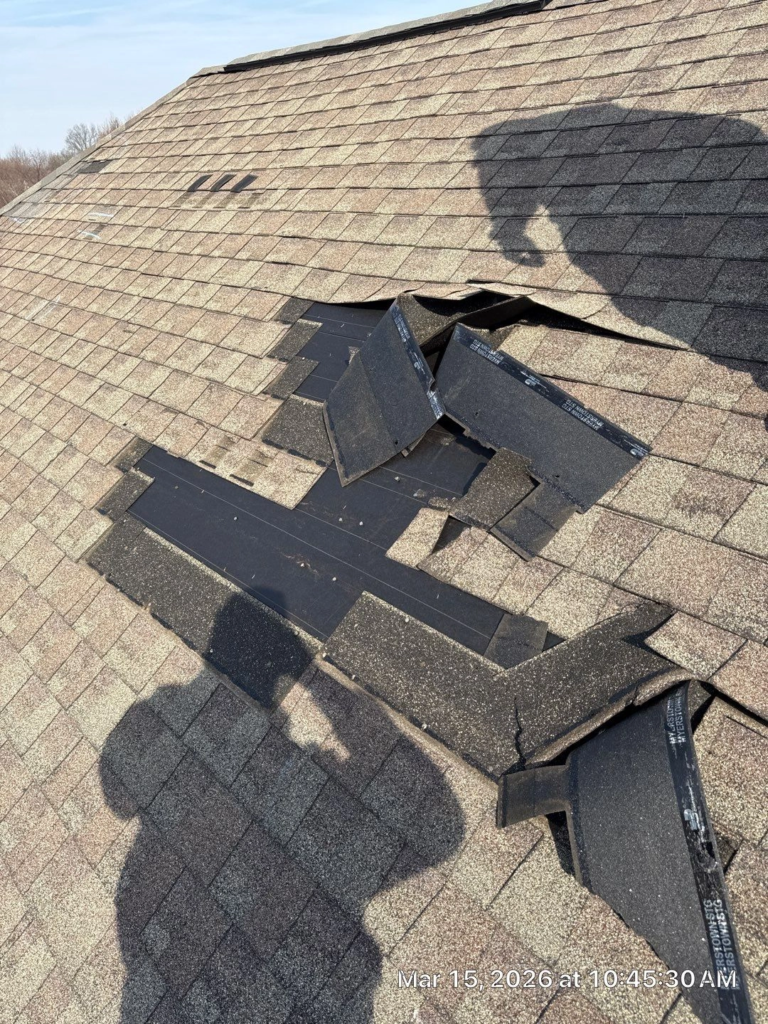
In my experience, these are the four things that age an Ohio shingle roof faster than the box says it should:
- Hail. Even small hail you didn't think mattered knocks granules loose. Lose the granules, lose the UV protection, lose 5–10 years off the back end. We average over 40 thunderstorm days a year around Reynoldsburg, and most years bring at least one hail event worth inspecting.
- Freeze-thaw cycles. Ohio winters bounce between 28°F overnight and 45°F by noon. Water seeps into hairline cracks, freezes, expands, and pries the shingle apart from the inside. This is the single biggest reason roofs in our area don't hit their full warranty life.
- Poor attic ventilation. A hot attic bakes shingles from underneath. I can tell within 30 seconds of stepping into an attic whether the roof above it will hit 25 years or tap out at 17.
- Bad install. Overdriven nails, missing starter strip, no ice-and-water shield in the valleys — I see this on roofs every week, and it cuts the lifespan in half.
3-Tab vs. Architectural Shingles
Three-tab shingles in our climate are usually a 15–20 year roof. Architectural (also called dimensional) shingles are thicker, heavier, more wind-rated, and realistically a 22–28 year roof. If you're replacing a roof in Central Ohio in 2026, architectural is the floor — I won't even quote three-tab on a primary residence anymore.
How Long Does a Metal Roof Last?
A properly installed metal roof lasts 40–70 years, with high-end standing seam systems pushing 70+ years. Metal is the longevity champion among practical residential options, and it handles Ohio weather better than most homeowners realize.
I've installed standing seam metal on farms out toward Lancaster that look brand new at 35 years. The reasons metal wins out here are pretty specific to our climate: it sheds snow before ice dams form, it flexes with freeze-thaw instead of cracking, and impact-rated panels barely register what asphalt would call a "totaling" hail event.
According to Owens Corning's roofing guidance on replacement timing, material choice is one of the biggest variables in lifespan — and that lines up with what I see on tear-offs every week.
The Catch With Metal
The trade-off is upfront cost. A metal roof runs roughly 2–3x the price of a comparable asphalt roof. But amortize it over 50 years versus replacing asphalt twice in that same window, and the math tilts back toward metal. The other catch: metal roofs are unforgiving of bad installers. If the fastener pattern or the underlayment is wrong, you'll know in five years.
How Long Do Tile Roofs Last?
Tile roofs — both clay and concrete — typically last 50+ years, and the tiles themselves can outlive the rest of the house. You don't see a lot of tile in Reynoldsburg or Pickerington (it's more of a southwest material), but I get asked about it because folks see it on TV remodels.
The honest answer for Ohio: tile is durable, but the underlayment beneath it usually has to be replaced every 20–30 years even though the tiles are still good. Ohio's freeze-thaw is also rough on clay tile — water absorbed into a clay tile will freeze, expand, and crack it. Concrete tile handles it better.
How Long Does a Slate Roof Last?
A real slate roof lasts 75–150 years and is the longest-lasting residential roofing material on the market. Slate is essentially stone — fireproof, mold-proof, and nearly impervious to weather.
The reason you don't see more of it: weight and cost. A slate roof can weigh four times what an asphalt roof weighs, which means most homes need reinforced framing to carry it. And the upfront cost is in another universe entirely. But if you own a historic home in German Village or one of the older parts of Bexley and you've got original slate up there, please don't tear it off — those roofs are often still functional and worth restoring.
How Often Does a Roof Need to Be Replaced?
Most Ohio homeowners replace their roof once every 20–25 years if they own the home long enough. That's the practical rhythm I see across our service area — buy a home, get 10–15 years out of the existing roof, then replace it once during ownership.
A few signals that the clock is up, in roughly the order I see them on inspections:
- You're finding granules in your gutter downspouts that look like coarse black sand. That's your shingles shedding their UV protection.
- Shingles are curling at the edges or cupping in the middle. Either way, the seal is gone and water can get under them in a wind-driven rain.
- You can see daylight through the roof deck from the attic. This isn't subtle. Call somebody.
- You've had three hail events on the same roof. This is my own benchmark — after the third real hail event, even an undamaged-looking shingle roof is on borrowed time.
- Your neighbors are all replacing theirs. Subdivisions get built at the same time and age out at the same time. If three houses on your street got new roofs last summer, get yours inspected.
Nationwide's homeowner guide on replacement timing makes a similar point about the 20-year mark being the right time to bring in a professional — that matches what I'd tell any homeowner in Reynoldsburg or the surrounding suburbs.
Can a Roof Be Repaired Instead of Replaced?
Yes — a roof can absolutely be repaired instead of replaced if the damage is localized, the decking underneath is dry and sound, and the roof has meaningful life left. I'd guess about 40% of the "I need a new roof" calls we get end up being repair jobs.
"I'd rather sell a homeowner a $700 repair that buys them five more good years than a $15,000 replacement they don't need yet. That's not charity — that's how you build a roofing business that's still here in 20 years."
Here's how I think about repair vs. replace on an inspection:
When Repair Makes Sense
- The damage is in one spot (one wind-lifted section, one tree-limb hit, one bad pipe boot).
- The roof is less than 15 years old.
- The decking under the damage is dry and structurally fine.
- The rest of the roof shows even, normal wear.
When Replacement Makes Sense
- The roof is 20+ years old and showing multiple wear signals.
- There's widespread granule loss across multiple slopes.
- The decking is soft, spongy, or rotted in several spots.
- You've already paid for two or three repairs in the last few years.
- Hail damage is widespread enough that insurance is willing to cover the full job (worth a free inspection to find out).
The honest rule of thumb: if you're going to spend more than about 30% of a full replacement on a repair, just replace the roof. You're throwing good money after bad otherwise.
What Factors Affect How Long a Roof Lasts?
Four factors decide your roof's lifespan more than anything else: material, install quality, attic ventilation, and local climate exposure. In Ohio, the climate piece is bigger than people think.
Ventilation (The One Nobody Talks About)
I'll keep beating this drum because it's true: a poorly ventilated attic will cook a shingle roof from underneath and take 5–10 years off its life. Proper intake at the soffits and exhaust at the ridge keeps the attic close to the outside temperature, which keeps your shingles flexible and your seal strips intact. When I do a free inspection in Reynoldsburg or Pickerington, ventilation is one of the first things I'm checking.
Installation Quality
A perfectly good shingle installed badly is just an expensive piece of garbage. Watch for: starter strip on every eave and rake, ice-and-water shield in valleys and 3 feet up from the eave, proper nail placement (not over-driven, not in the wrong spot), and step flashing — not caulk — wherever the roof meets a wall.
Climate
Reynoldsburg sits right in the middle of Central Ohio's freeze-thaw, wind, and hail corridor. We see warm-front collisions all spring, hailstorms most years, and winter ice dams. Those forces stack up over time and shorten the average roof's life compared to milder parts of the country.
Pitch and Roof Complexity
Steeper roofs shed water and snow faster, so they generally last longer. Complex rooflines with lots of valleys, dormers, and skylights have more potential leak points — which means more places for a roof to fail before its time.
FAQ
How Long Does a Roof Last in Ohio Specifically?
A standard architectural asphalt shingle roof in Ohio lasts 20–25 years. A well-installed metal roof lasts 40–70 years. Ohio's freeze-thaw and hail tend to bring the average toward the lower end of any published range, so plan accordingly.
Is It Cheaper to Repair or Replace a Roof?
In the short term, a repair is almost always cheaper — usually $400–$2,500 versus $10,000–$25,000 for a full replacement. But if your roof is past 18–20 years old, repeated repairs become a money pit, and replacement is the better long-term value.
How Do I Know If My Roof Needs Replacing or Just Repair?
A roof needs replacement when the damage is widespread, the decking is compromised, or the roof is past 20 years old with multiple wear signals (granule loss, curling, sagging). It can be repaired if the damage is isolated, the underlayment is intact, and the roof is under 15 years old.
Does Homeowners Insurance Cover a New Roof in Ohio?
Sometimes — if the damage is from a covered event like hail or wind, and the roof isn't already past its useful life. Ohio adjusters have tightened claim requirements over the last two years, so documentation matters. A reputable local roofer can document hail damage properly and meet with your adjuster.
How Often Should I Get My Roof Inspected?
I recommend a free inspection every 2–3 years after the roof passes the 10-year mark, and always after a significant hail or wind event. Most Ohio homeowners only call a roofer when there's a visible leak — by then, the damage is usually well underway in the attic.
Final Thoughts
So how long does a roof last? In Central Ohio, plan on 20–25 years for asphalt shingles, 40–70 for metal, 50+ for tile, and basically forever for slate. But more important than the number on a brochure is what's actually happening on top of your house right now — the ventilation, the install quality, the hail events you may or may not remember, and the freeze-thaw cycles slowly working at every seal and seam. The honest way to know where you stand is to have somebody who knows what they're looking at climb up there and tell you.
If you're in Reynoldsburg, Pickerington, Pataskala, or anywhere across Central Ohio and you're not sure whether your roof has five years left or fifteen, that's exactly the kind of call I want to take. Dynasty Roofing offers free, no-pressure inspections — we'll give you a straight answer, and if the roof has life left, we'll tell you that too. You can learn more about our team and what we do on our Reynoldsburg roofing page, or just give us a call to set up a time. No quote pressure, no "you need a new roof" sales pitch — just an honest look from a local roofer who's been doing this a long time.